Adult ADHD, Emotional Reactivity, and Communication
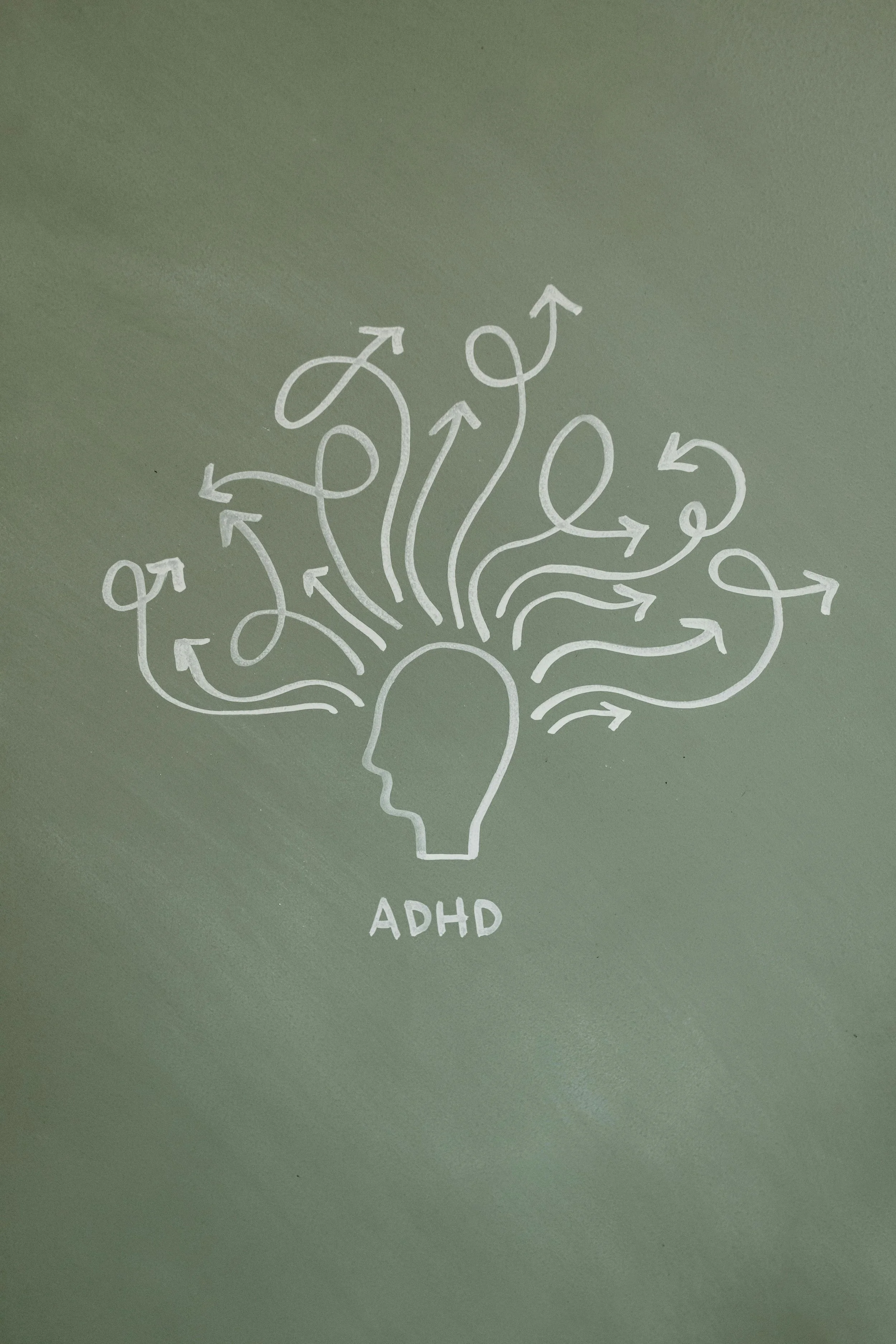
In adults, ADHD often shows up in communication skills in ways that can easily be misunderstood: interrupting during conversations, reacting quickly or intensely, seeming distracted, being emotionally reactive, or appearing impatient. These behaviors can shut down communication and appear to be directed to a specific person, but they're not intentional - What looks like "anger," "attitude," or "intensity" in your communications is often just a nervous system that fires faster than your intentions can keep up with. These reactions are incredibly common in people with ADHD, especially when high sensitivity and shame are part of the picture.
Research supports this. A 2014 study found that higher ADHD symptoms were linked to both momentary bursts of anger (state anger) and a general tendency toward anger (trait anger). A large 2020 study strengthened this picture: over half of adults with ADHD reported frequent emotional swings, compared to only 5% of adults without ADHD. Those who experienced anger in childhood were especially likely to continue having strong fluctuations in adulthood.
"We have two ears and one mouth so that we can listen twice as much as we speak." - Epictetus
What this tells us is simple: Many communications that are interpreted as rudeness, anger, or irritation are often neurobiological, not personal. Understanding this can shift communication from frustration to empathy - and improve relationships on both sides. You're not broken, you're overwhelmed, and you have your work cut out for you. There are some roadblocks to communication that you may experience.
Your tone may interfere with communication
Many adults with ADHD notice that they sound angry even when they don't feel angry. The reason isn't character, it's physiology. Your tone may sharpen because your mouth reacts milliseconds before your more thoughtful self gets a vote. This might shut other people down from wanting to work with you, or may give the impression that you are unapproachable. Many adults with ADHD also use sarcasm without realizing what they are really doing is putting up a protective wall in response to embarrassment, confusion, or fear of being judged. Sarcasm becomes a shield that says, "I'm fine, I didn't care anyway," even when you actually did (they're shortcuts your brain takes to escape discomfort).
Shame also interferes with communication
When you feel embarrassed, judged, or unsure, your body may automatically go into fight or flight to protect you. Adults with ADHD often have strong physical reactions to shame or overwhelm, including increased heart rate, muscle tension, fatigue, headaches, nausea, or even shutting down and going quiet. These reactions aren't dramatic - they're biological. A highly sensitive amygdala and an underactive frontal cortex make emotions hit harder and make calming down more difficult, leading to intense feelings and, over time, burnout. So while you may actually feel confused, ashamed, guilty, or overstimulated, your voice might sound harsher than you intended.
Fear tends to interfere with communication
Interrupting is another place where neurobiology shows itself. The ADHD brain panics when it has a thought that might disappear. "Blurting out" feels like the only way to keep track of the conversation, the relationship, or your place in the moment. That urgency can come across as rudeness, but it's not- it's timing. One deep fear connected to interruption, as commonly reported by many with ADHD, is "If I don't express this feeling now, I'll explode later." For ADHD minds, this fear is logical, not dramatic. You've learned that when you push feelings down, they don't dissolve - they build pressure. Emotional overwhelm happens fast; labeling feelings happens slowly. By the time you notice you're overwhelmed, you may already be at a ten out of ten. Bursting out can bring relief, which trains the brain into believing outbursts are the only safe release valve.
Retrain Without The Shame
You can learn ways to release emotional pressure in small, steady amounts before it hits the breaking point. Think of your emotions like a shaken soda bottle - sealing it tight guarantees a mess, blowing it open creates a blast, but opening it slowly prevents the explosion entirely. Skills like micro-releases, short statements of truth, brief pauses paired with movement, or letting yourself feel an emotion for twenty seconds can regulate your system without pushing anything down. These are not "controlling yourself." They're giving your nervous system more exits so it doesn't choose the biggest one. This is meaningful in communication with others, as being calmer internally means you're less likely to interrupt, shut down, or sound sharper than you intend. These tiny resets create space for clearer thinking and slower responses, which helps your communication feel more grounded and respectful.
Treat the big feelings, like shame, overwhelm, or urgency, as a signal, not a verdict. When you feel a rush of big emotions, it usually means, "I care about how I'm coming across, or this thing matters to me," not "I am fundamentally the problem." Even behaviors you might feel embarrassed to admit - like if you flip someone off behind their back impulsively - can make sense through the ADHD lens. That gesture is likely not about cruelty; it's a quick way your body releases tension when words feel unsafe or overwhelming. It is disrespectful, yes, but it is a larger signal of what's going on inside. Once you understand the function and the underlying vulnerability, you can replace it with private gestures, short inner statements, or brief exits that give you relief without leaving you feeling guilty afterward. When you see these emotions as information rather than proof that something is wrong with you, you stay more grounded and less defensive. That pause gives your brain time to choose calmer language and honest-but-soft communication that builds connection instead of slipping into sharpness that creates distance.
Helpful tactics like naming your overwhelm before others interpret it for you looks something like this: Take a five-second inhale-exhale pause before speaking, using interrupting scripts that signal your intention rather than your urgency ("Excuse me, I'd like to add something when you have a moment."), and trading sarcasm for gentle honesty (Sarcasm: "Oh, great, another thing I have to fix about myself! Just what I needed today." Gentle honesty: "I'm feeling really worn out today, and I'm worried about how to meet these needs.").
These aren't moral corrections - they're neurological strategies that help your internal experience and external communication line up more accurately. A tactic like this is helpful in preventing misunderstandings by showing that your reaction is about your internal state, not them. It signals that you need space or a moment to process, which reduces tension and keeps the conversation safe. This also sets clear expectations, letting others know how to support you rather than guessing and potentially misreading your behavior.
There Is Much More
If you have ADHD, you probably know how quickly emotions can take over a conversation, making you sound sharper or more intense than you feel. Hopefully, these possible solutions have inspired your efforts in building stronger communication skills while also giving insight into life with ADHD. One little article isn't going to change much. The hard work is what you do from here. You may have to work a little harder than other people to curb your responses and expressions. This is a normal part of working with the brain you have, and not comparing your brain to a brain that is different from yours. You can strengthen your skills in communication even if it's hard. You've got this!
Sources:
Barkley, R. A. (2015). Attention-Deficit Hyperactivity Disorder: A Handbook for Diagnosis and Treatment (4th ed.). Guilford Press.
Shaw, P., et al. (2012). "Development of the ADHD brain: imaging and neurobiology." Nature Reviews Neuroscience, 13(11), 839-851.Sacchetti, G. M., & Lefler, E. K. (2014). ADHD Symptomology and Social Functioning in College Students. Journal of Attention Disorders, 21(12), 1009-1019. https://doi.org/10.1177/1087054714557355 (Original work published 2017)
Lundervold AJ, Halmøy A, Nordby ES, Haavik J, Meza JI. Current and Retrospective Childhood Ratings of Emotional Fluctuations in Adults With ADHD. Front Psychol. 2020 Dec 15;11:571101. doi: 10.3389/fpsyg.2020.571101. PMID: 33384637; PMCID: PMC7769943.
Kripalani, M (2023) Strategies To Reduce ADHD Overwhelm. https://www.adhdcentre.co.uk/strategies-to-reduce-adhd-overwhelm/#:~:text=This%20is%20where%20someone%20might,anything%20and%20internally%20you%20freeze.
Roubicek & Thacker Counseling is Fresno’s premier provider of individual, couples, family, and group therapy. We offer in-person and online remote therapy sessions. Contact us today to change the way you feel.